

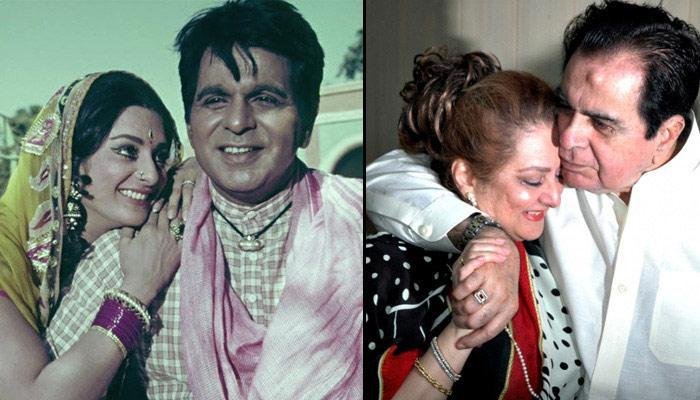
Yusuf Khan was back in Mumbai after his trip to Pune, and his main goal was to find work or find new ways to contribute to the family’s income. He had no idea that Lady Luck was about to smile on him. The providential chain of circumstances catapulted young Yusuf Khan into Dilip Kumar, the megastar of the then-Bombay film industry now known as Bollywood.
There are other accounts of Dilip Kumar’s debut in the film industry, but we will only discuss the one we believe is the most accurate.
Yusuf began his ventures in the city by assisting his Agha ji in his fruit business. Yusuf began visiting orchards in the steep districts of Dehradun and Nainital in north India since his elderly father was becoming feeble. Little did the young man know that one of these journeys would serve as his springboard to film stardom, and that it would take place at Mumbai’s famed Bombay Talkies Studios! This was around 1943.
Bombay Talkies was one of the country’s three iconic cinema studios of the time, along with Prabhat Studios in Pune and New Theatres Studios in Kolkata (formerly Calcutta). Around the mid-1930s, the scion of a wealthy Bengali family and London-trained lawyer Himanshu Rai started Bombay Talkies.
The studio utilised well-trained British, German, and Indian technicians and produced films such as ‘Achhut Kanya’ (1936), ‘Kangan’ (1939), ‘Bandhan’ (1940), ‘Jhoola’ (1941), ‘Basant’ (1942), ‘Kismet’ (1943), and others. Devika Rani, the niece of Rabindranath Tagore and the daughter of the surgeon-general of Chennai (formerly Madras), Colonel M.N. Chowdhury, was a student at the Royal Academy of Dramatic Arts in London, where she met Himanshu Rai, who invited her to work in his films.
Devika Rani was therefore crowned the First Lady of Indian Cinema. They eventually married. She appeared in his films, and they co-founded the studio in 1935 as a joint stock corporation with a Rs25 lakh capital base. It was built on the grounds of F.E. Dinshaw’s enormous vacation residence in Malad, a then-remote Mumbai neighbourhood. The studio was built on modern lines, with sound- and echo-proof stages, an automated laboratory, editing rooms, a preview theatre, a carpentry workshop, and plenty of space for artists and administrative employees.
The German technicians who had worked with Rai on ‘Light of Asia,’ ‘Shiraz,’ and ‘A Throw of Dice’ were assembled to oversee production and teach local talent. All of the early Bombay Talkies films were directed by Franz Osten, with British sound technician Hartley and laboratory technician Zollee. Bombay Talkies set a standard in technical brilliance unrivalled by any other studio at the time, equipped with the latest machinery and operated by a highly competent workforce. Unfortunately, Himanshu Rai died of a nervous breakdown in 1940, at the age of 48. Devika Rani then took over the studio, and by 1943, when Dilip Kumar was discovered, she was the boss.In addition to performers Ashok Kumar, Dilip Kumar, Raj Kapoor, Dev Anand, and Kishore Sahu, Bombay Talkies groomed directors Shashdhar (S.) Mukerji, Amiya Chakrabarty, Nitin Bose, Gyan Mukherjee, N.R. Acharya, and authors Babu Bhagwati. To name a few, there’s Charan Varma, Niranjan Pal, Saadat Hasan Manto, Pt. Narendra Sharma, Krishan Chandar, and music directors Saraswati Devi, Ramchandra Pal, Anil Biswas, and S.N. Tripathi.
By chance, as Devika Rani and director Amiya Chakrabarty were looking for locations in Nainital, Yusuf was also in the same hill resort for a business engagement. He met Devika Rani and Amiya Chakrabarty by coincidence, and both the woman and Chakrabarty admired his tall gorgeous Pathani appearance.
Yusuf was taken aback when he discovered that celebrity Devika Rani was interested in him. “Do call on me when you return to Bombay as I wish to discuss something with you,” she said as she handed him her business card. Back in Mumbai, Yusuf’s father encouraged him to seek guidance from Dr Masani, a close family friend.
Yusuf casually revealed his interaction with Devika Rani in Nainital during his talk with Dr Masani. Dr Masani, Devika Rani’s personal physician and late husband’s family friend, encouraged Yusuf to visit her and offered to take him to Bombay Talkies. To make a long story short, Devika Rani and Amiya Chakrabarty took Yusuf’s screen test and signed him on for ‘Jwar Bhata’ (1944) at the then-astronomical monthly wage of Rs 1,000 plus Rs 200 as war allowance).
As they say, the rest is history. In addition, Yusuf’s close friend and famed actor-director Raj Kapoor was then engaged as an apprentice with Bombay Talkies for a meagre monthly income of Rs140, and he even performed a tiny role in ‘Jwar Bhata.’
“Bombay Talkies was the nicest thing that occurred to me at that juncture in my life,” Dilip Saheb recalls. I couldn’t have found a better career than the one Devika Rani offered me.” One of the first Bombay Talkies personnel to meet Yusuf was production manager Hitendra Chowdhury, who eventually became pals with the megastar.
When Yusuf was officially initiated into the Bombay Talkies, the studio’s think-tank insisted on giving him a different and more appropriate screen name. This thrilled Yusuf because the new name would keep his involvement in films a secret, and Aghaji, who despised filmies, would not learn his son’s true occupation. Bhagwati Charan Varma, a renowned litt rateur, proposed three alternative names: Jehangir, Vasudev, and Dilip Kumar. Yusuf chose the now-famous screen name Dilip Kumar almost instinctively and quickly.
The studio think-tank insisted on giving Yusuf a different and more fitting screen name after he was legally accepted into the Bombay Talkies. This pleased Yusuf as the new name would conceal his joining the film industry and prevent Aghaji, who despised filmi people, from learning his son’s true occupation. Three alternate names—Jehangir, Vasudev, and Dilip Kumar—were proposed by the renowned poet Bhagwati Charan Varma. Yusuf chose the now-famous screen name Dilip Kumar almost instinctively and without thinking.
According to Dilip Saheb’s memoirs, Ashok “bhaiyya” (as he called Ashok Kumar) gave him the best and most practical acting advice: “You have a good look, and I can see you want to study. It is incredibly easy. Simply act as you would if you were actually in that circumstance. Acting will come across as acting, which is quite ridiculous.
Dilip Saheb continues, “I met him every day and he regarded me like a younger brother who had to be guided and protected.” This statement refers to his relationship with the legendary Ashok Kumar. In his presence, my shyness and reserve started to wane, and his kindness and love for me gave me a boost.
Young Dilip had the chance to see Ashok Kumar sing while the movie “Kismet” was still in pre-production, and it was a fantastic learning experience for him. The studio only hired the top performers, each a pro in their respective fields. Together, they would discuss and share their opinions on the songs, conversation, music, filmmaking, camera work, editing, direction, and lighting, among other topics. For young Dilip, learning about filmmaking in all of its numerous facets—including, of course, acting—was a stimulating experience.
Ashok Kumar introduced Dilip Kumar to S. Mukerji, his brother-in-law and a doyen of cinema who went on to build the legendary studios Filmistan and Filmalaya and produce countless box office successes. Dilip Saheb was able to impress Mukerji, an erudite, well-read, and gentlemanly man, who taught him the finer points of filmmaking, thanks to his fluency in the Urdu language.
After packing, Dilip Saheb entertained Ashok Kumar and S. Mukerji with poetry in Persian and Urdu. S. Mukerji was so taken aback that he requested Dilip take part in the studio’s story-dialogue sessions with legends like Amiya Chakrabarty, Gyan Mukherjee, Krishan Chandar, and others. For the young Dilip, this experience was quite enlightening. He understood the “mool mantra” (fundamental principles) of effectively emoting, which was that he would have to do the work of faking sentiments and communicating emotions on his own. The foundation for the later, highly praised Dilipian type of histrionics was laid.
Surprisingly, Dilip Kumar hadn’t seen a single Hindi feature film up until this point. S. Mukerji advised him to start watching movies, and he started with Hollywood productions. Legendary performers and actresses like Paul Muni, Clark Gable, Ingrid Bergman, Jimmy Stewart, Charles Laughton, etc. were among his favourites. Dilip Kumar gained extensive exposure to the various ways of the past masters of the craft while studying their acting skills through close observation. He then started developing his own acting techniques.
Under the competent supervision of director Amiya Chakrabarty, Dilip Kumar eventually put on makeup for the first time and began filming for his debut movie, “Jwar Bhata,” in May 1943, following this protracted training period. The actor Dilip Kumar had started to change.
In a frank interview that was published by “Filmfare” on January 17, 1969, Dilip Saheb added the following comments about the development of his career:
“We had to do much more than just put on makeup and show up for work in Bombay Talkies, where I began my career. We were required to watch excellent movies frequently, discuss the works of other artists, and read books on drama, acting, and criticism. As authors, directors, producers, technicians, and artists, we were a really close-knit family. There would frequently be a vigorous discussion, and we could always confide our concerns in our more knowledgeable elders.
Sadly, those institutions are no longer around. Dealmakers’ specialty today is filmmaking. Younger artists are being developed in a brutal and mercenary environment. Although they are perhaps more intelligent and cunning than we were, their efforts are stifled, and they are unable to establish their own high standards. Today, the quantity of acting jobs is seen as a status indicator.