

The 1975 singer’s onstage condemnation of homophobic laws has angered conservatives and left some LGBTQ+ people uneasy
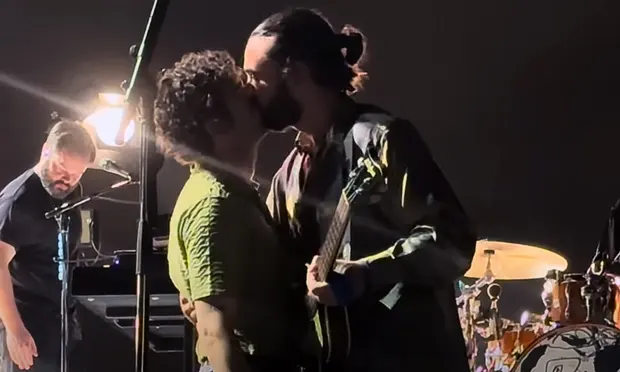
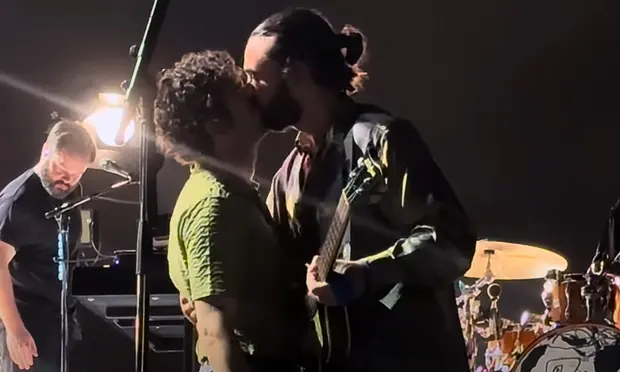
The 1975 frontman Matty Healy’s recent appearance at a festival in Kuala Lumpur – where he criticised Malaysia’s homophobic laws and kissed a male bandmate on stage – has strongly angered conservatives in the country.
Members of the LGBTQ+ community have also expressed unease over his actions, fearing that the episode risks further exacerbating the hostilities they face.
“He gets to fly out of the country and not face the consequences, while our people have to face the brunt of what just happened,” said the drag performer Carmen Rose, who described the speech as self-serving, adding that it risked undoing the work of activists.
He said: “Unfortunately you don’t get a set of loads of uplifting songs because I’m fucking furious. And that’s not fair on you, because you’re not representative of your government. Because you’re young people, and I’m sure a lot of you are gay and progressive and cool.”
The comment was met with some cheers from the audience.
Healy then kissed the bass player Ross MacDonald as they played the song I Like America & America Likes Me.
About 30 minutes later the band walked off stage, with Healy announcing they were now banned.
Dhia Rezki Rohaizad, the deputy president of Jejaka, a social support group for gay, bisexual and queer men in Malaysia, criticised the government’s handling of the situation, citing Healy’s right to freedom of expression.
But he added that Healy’s speech was not how many activists in the country would have wanted to highlight the issue. “We’ve been doing a lot of work on the ground, community organising, and having stakeholder meetings with local government agencies,” he said. “Doing it at this scale, with a lot of people who are not aware of the discussions going around with regards to queer activism, that is what is harmful.”
Malaysia’s federal penal code, first introduced during British colonial rule, punishes oral and anal sex with up to 20 years in prison. Each state and the federal territories of Kuala Lumpur and Putrajaya also have sharia codes that generally criminalise gay sex and gender nonconformity.
“For people who live in Kuala Lumpur, the raid was a very scary night and I think that since then a lot of us do live in fear,” said Mikhail Hanafi, a member of the LGBTQ+ community. “In a lot of other places in the world, queer nightlife is one of the places where at least a subset of queer people can feel safe and a sense of community.”
This was no longer the case in Malaysia, Hanafi said, adding that when the lights came on in a club at the end of the night, some friends immediately felt a sense of panic, fearing that this was the sign of another police raid.
There was value in foreign performers speaking out, said Hanafi. But he added: “They need to be mindful of how they speak. They need to speak to the community beforehand.”
Activists are especially concerned that Healy’s comments come just weeks before state elections. Campaigning often coincided with a rise in hate speech, said Thilaga Sulathireh, a founder of the group Justice for Sisters, which advocates for LGBTQ+ rights.
On Monday, the national human rights commission of Malaysia said that while it “advocates equality for all and freedom of expression, it is important to stress that these rights must be practised responsibly and within any restrictions imposed by local laws and cultural considerations”.
Sulathireh said the statement illustrated why LGBTQ+ communities felt nervous. “It is really a testament to the protection that LGBT people have in Malaysia. Of course, folks are going to be concerned … if anything were to happen to them they feel completely unprotected.”
Carmen Rose says she is not able to advertise performances in Kuala Lumpur, due to pressure on the community. “Any foreign artist who comes here and who wants to advocate for us, they need to understand how to go about it,” she said. “What works in the west may not work here. They may actually do more harm than good.”
… there is a good reason why not to support the Guardian.
Not everyone can afford to pay for news right now. That is why we keep our journalism open for everyone to read, including in India. If this is you, please continue to read for free.
But if you are able to, then there are three good reasons to support us today.
1. Our quality, investigative journalism is a scrutinising force at a time when the rich and powerful are getting away with more and more
2. We are independent and have no billionaire owner pulling the strings, so your money directly powers our reporting
3. It doesn’t cost much, and takes less time than it took to read this message
Help power the Guardian’s journalism for the years to come, whether with a small sum or a larger one. If you can, please support us on a monthly basis from just $2. It takes less than a minute to set up, and you can rest assured that you’re making a big impact every single